Choose Restaurant Seating for Service, Wear, and Repair
A restaurant chair is handled by diners, shifted by servers, cleaned repeatedly, and moved again at close. A restaurant buyer needs evidence about how a proposed table and chair perform in the particular room. Appearance matters; so do reach, stability, cleaning access, upholstery care, and a plan for worn parts.
For a bar or restaurant reader, the important question is how seating behaves through a whole service. A table that photographs well may slow a server carrying plates. A chair may feel comfortable for a short sample sit but become awkward when pulled across the floor repeatedly. Evaluate the furniture with guests, staff, and cleaners in mind.
Map the dining room in its occupied state
Start with table positions, then draw chairs pulled back for sitting and standing. Mark the route from entrance to seat, seat to restroom, kitchen to table, and table to clearing station. A bare floor plan can hide collisions that appear when diners are seated. Check turns around corners and the space where a queue might form.
The U.S. Access Board's accessible routes guide explains that accessible paths must connect dining areas where the ADA requires them. It applies to covered U.S. facilities and is not a complete site review. It reinforces a practical planning step: movable chairs, waiting guests, and service carts should not erase the intended route.
Test a full table during a simulated meal. Put plates and glasses in place, then ask someone to take a chair, stand, and walk away. Ask a server to approach with a tray. If both actions cannot happen comfortably, reduce table count or adjust furniture size before ordering. More seats on a drawing do not always mean a better dining room.
Check the table and seat as a working pair
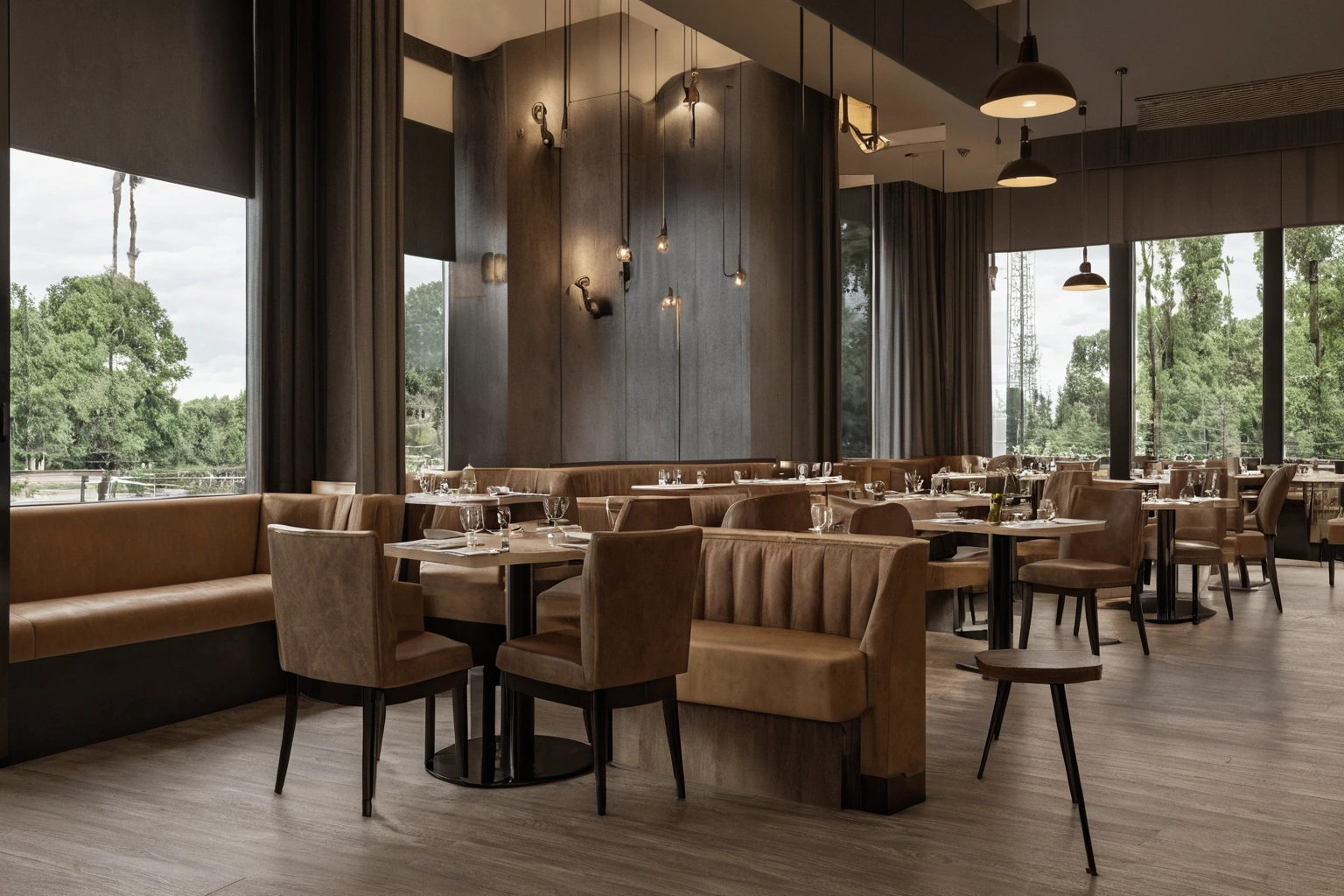
Chair height, arm position, and table apron affect how diners sit. A wide armchair can be comfortable but may not tuck under a particular table. A deep upholstered chair may push a diner too far from a small plate. Test the actual pair, not two product dimensions compared in a spreadsheet.
Accessible dining positions need more than an empty chair location. The U.S. ADA Chapter 9 standard for dining surfaces addresses a forward approach and knee and toe clearance for covered built-in dining surfaces. An accessibility professional should apply the relevant requirements to the specific restaurant. The buyer can still ask whether table bases, aprons, and neighboring chairs permit a usable approach.
Consider the meal length and menu. A quick lunch may need a different seating feel from a long dinner. A heavy table may be stable but difficult to reposition for a large party. A small bistro table may suit drinks but not shared dishes. Use the service format to choose the furniture's function, then test style and finish within those constraints.
Check the floor. Chair glides should suit tile, wood, carpet, or another surface; the manufacturer and flooring supplier can advise. A chair that scrapes or catches will be moved awkwardly and may damage both furniture and floor. The dining room's sound level also changes with upholstery and hard surfaces, so compare material options in the actual space if possible.
| Item | Use test | Maintenance question |
|---|---|---|
| Dining chair | Sit, stand, and pull back | Can glides and seat cover be replaced? |
| Dining table | Set the complete meal | How is the top cleaned and repaired? |
| Booth | Enter and leave with neighbors seated | Can the seat be serviced in place? |
| Bar stool | Climb, sit, and dismount | Are footrests and joints inspectable? |
Specify cleaning by material
A dining room is cleaned throughout the day. The U.S. CDC's facility-cleaning guidance says products should be appropriate for the surface and distinguishes routine cleaning from disinfection when needed. A restaurant has its own local food-safety requirements and operational procedures; the CDC page does not replace them. Obtain the manufacturer's instructions for each tabletop, frame, seat, and fabric.
The U.S. FDA explains that its Food Code is a model for food-control jurisdictions, not a single nationwide restaurant rule. This distinction matters when someone specifies a cleaning procedure. The operator should follow the applicable local rules and the furniture's approved care instructions, especially where a surface directly contacts food.
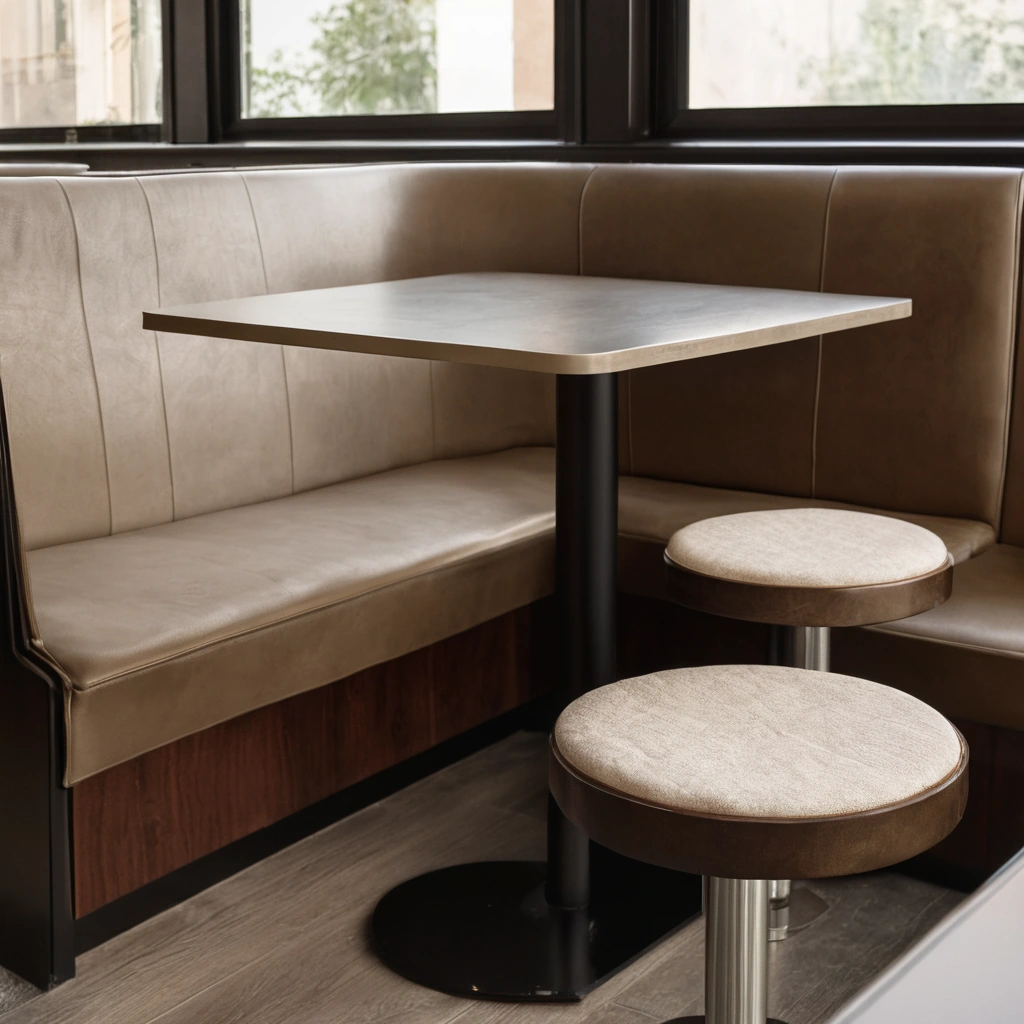
Build cleaning access into the layout. A table base that collects debris in a narrow recess may take more labor than the top suggests. A banquette can reduce chair movement but may have seams that need inspection. A chair that is easy to lift and wipe can help staff keep pace with turnover, provided it still meets comfort and durability needs.
Test the proposed cleaner on the actual finish as the supplier directs. Record what to do with a spill, a sticky mark, or a damaged edge. Do not assume that a stronger chemical or rougher cloth is a better response. Care instructions should be available to the team at the point of use, not locked in a procurement folder.
Plan for the daily move and reset
At close, staff may move chairs, wipe tables, stack equipment, and clean floors. The U.S. Occupational Safety and Health Administration's restaurant clean-up guide identifies repetitive reaching and lifting as risks and advises help when moving heavy tables or chairs. Its page is aimed at young workers; a restaurant still needs its own safety process. A furniture choice should be tested with the people who reset the room.
Ask how many pieces will move each day. A heavy chair may be reasonable in a fixed position but burdensome if every chair is lifted for floor cleaning. A lightweight chair may be easy to move yet need a different stability or repair assessment. Storage for spare chairs should be planned, not improvised in a corridor.
Do not drag wooden furniture by arms or backs. The Canadian Conservation Institute identifies careless handling as a source of damage to wood furniture. Its care note is not a commercial warranty. Combine the selected manufacturer's handling directions with a practical staff demonstration before opening.
Keep a repair plan beside the purchase order
High-use furniture will need maintenance. Ask whether glides, upholstery, fasteners, or table-edge components can be replaced. Keep model and finish references so a damaged item can be matched later. For classic chairs from Modenese Furniture, made in Italy, that reference sheet should travel with the purchase order, so a reupholstered seat years later can be matched to the original finish. A loose chair joint should be taken out of service for assessment rather than hidden at the back of the room.
Record defects by item and location. If the same part fails repeatedly, compare the pattern with how that zone is used. The cause might be a cleaning method, floor surface, or mismatch between a furniture model and its duty. Repair decisions should consider room downtime and the guest experience, not only the price of the replacement part.
At handover, the restaurant should have a scaled occupied plan, item list, cleaning sheet, spare-part contacts, and a brief inspection routine. Those documents help preserve the dining room's appearance through ordinary service. Good restaurant furniture is not merely attractive on opening night; it remains comfortable, accessible, and maintainable as the room is used.
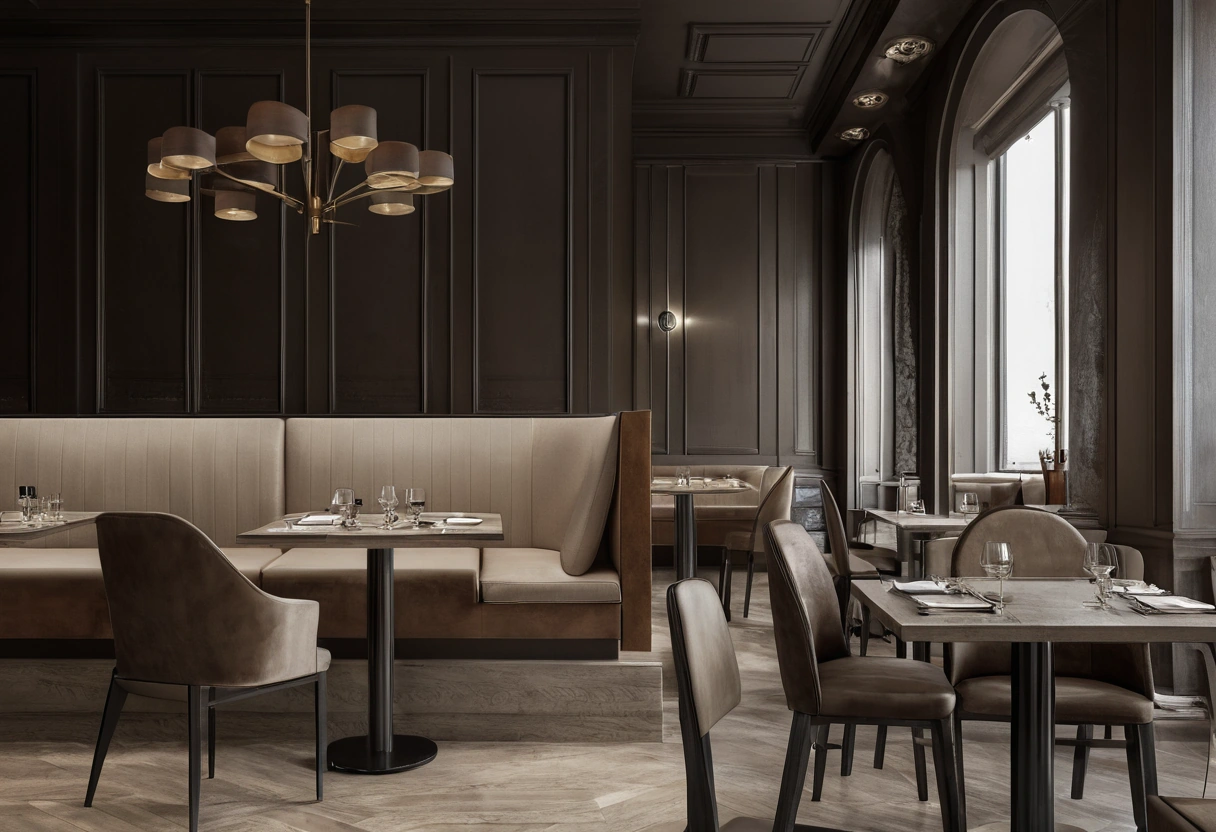
At a trial service, watch where staff place cleaning tools and dirty dishes between tables. If a side station is too far away, staff may use an empty dining table as temporary storage. The furniture plan can address that behavior with a properly located service point. The aim is to make the clean route and the clearing route both practical without asking staff to improvise around guests. This is a more reliable test than judging an empty dining room photograph alone.
Ask the supplier to demonstrate replacement of a chair glide or seat cover during procurement. A promise that parts are available is less useful if staff cannot identify or fit them. Keep one annotated photo of each serviceable component with the room inventory and train a responsible person to inspect it.